Your Marketing Is Building a Legacy — Whether You Know It or Not
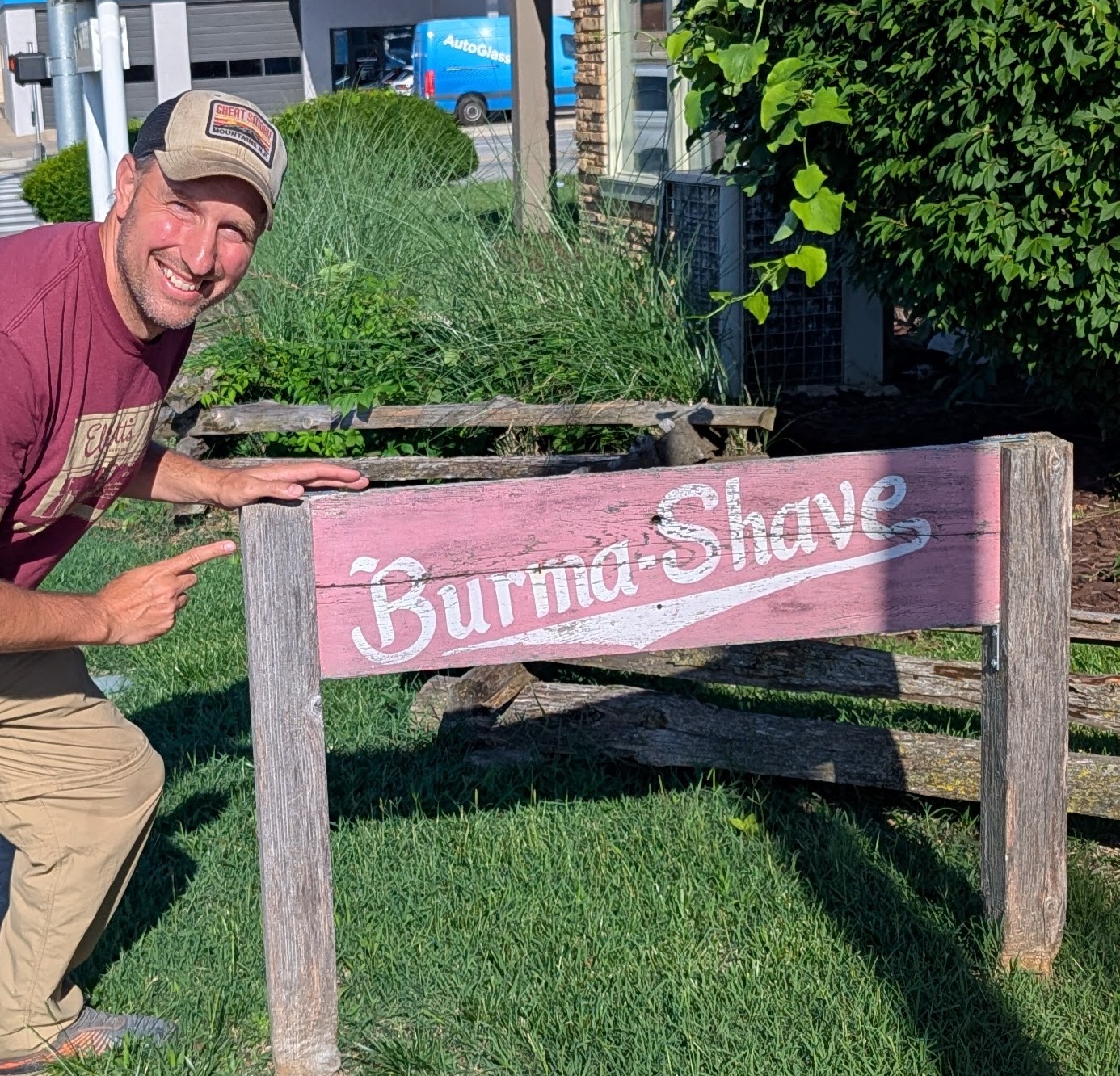
There's a stretch of Arizona's old Route 66, between Ash Fork and Kingman, where people pull off the highway to read signs advertising a shaving cream that hasn't been sold in decades.
They planned for it. They drove out of their way for it. And when they find the signs, they take pictures.
The Ad That Outlived the Product
If you've ever driven the original Route 66, you may have encountered the re-created Burma-Shave signs — six small red boards spaced 100 feet apart, each carrying one line of a rhyming couplet, with the final sign revealing the product name. The format was invented in 1926 by Allan Odell, a young man trying to save his father's struggling shaving cream company. The idea was simple: give bored drivers something to smile about.
It worked better than anyone imagined. By the 1950s, Burma-Shave was the second-best-selling brushless shaving cream in the United States, and its signs lined highways from Maine to California. Then came the interstate highway system. Drivers were moving too fast for roadside poetry. Sales declined. In 1963, the company was sold to Philip Morris, and the signs were taken down. Burma-Shave — the product — was gone by 1966.
But something unexpected happened. The signs didn't fade from memory. They grew more beloved. Today, the original sign collection is preserved in the Smithsonian's National Museum of American History. Re-creations dot Route 66 as tourist attractions. Collectors hunt for originals. People write articles, books, and blog posts about them.
The product is gone. The advertising lives forever.
Most Organizations Think About Marketing Backwards
The conventional view of marketing is transactional: you create an ad, the ad creates awareness, awareness creates customers, customers create revenue. Under this model, advertising is a cost you minimize and a tactic you optimize. Once a campaign stops producing leads, you pull it.
This is not a bad model. It just isn't the whole picture — and for mission-driven organizations, it may be the wrong frame entirely.
Burma-Shave didn't set out to build a cultural artifact. They set out to sell shaving cream. But the way they chose to do it — with wit, with warmth, with a genuine delight in the small joy of a clever rhyme — left an imprint that outlasted the company itself. Every touchpoint they created carried the fingerprints of their character.
That's not a marketing lesson. That's a mission lesson.
Everything You Do Is Building Something
For executives leading ministries and faith-based nonprofits, this distinction matters enormously.
You are not just running programs. You are not just sending newsletters, hosting events, publishing content, or posting on social media. You are constructing, piece by piece, the lived experience of your organization's mission. Every email your team sends. Every volunteer interaction. Every post. Every how-to video, every thank-you note, every event program — all of it is material in something larger than any individual campaign.
The question isn't whether your marketing is building a legacy. It already is. The question is whether the legacy it's building reflects your mission.
This is where many well-meaning organizations drift. The mission statement says one thing — restoration, dignity, service, hope — but the communications feel transactional, urgent, or generic. The newsletter is a fundraising pitch disguised as a story. The social media posts are performative rather than genuine. The donor communications feel like they were written by someone who doesn't quite believe what they're saying.
Donors, volunteers, and the people you serve notice, not always consciously. But over time, the gap between stated mission and experienced reality erodes trust in ways that no campaign can repair.
What Mission-Aligned Marketing Actually Looks Like
It looks less like advertising and more like hospitality.
It means your welcome email to a new donor carries the same tone as your mission statement — not warmer just because someone just gave money, but consistently warm because that's who you are.
It means your social media isn't chasing trends, but offering something useful, honest, and rooted in your actual work. People should be able to tell what you stand for from a single post, without seeing your logo.
It means your end-of-year appeal doesn't lead with the tax deadline. It leads with the story — the person, the moment, the change that only happened because someone like your reader chose to show up.
It means your staff understands that they are not separate from the mission when they answer the phone, reply to a volunteer inquiry, or represent your organization at a community event. They are the mission in that moment.
Burma-Shave's signs worked because they were the same everywhere — same format, same spirit, same implicit respect for the person reading them. They didn't have a different voice for different audiences. They had a voice, and they kept it.
Your organization needs the same consistency.
The Question Worth Sitting With
Here's a thought experiment worth bringing to your leadership team:
If our organization closed tomorrow, what would people remember about the experience of engaging with us?
Not the programs. Not the metrics. The experience. The feeling. The small moments that added up to something.
Burma-Shave's product is gone. Its legacy is what people felt when they read those signs — a little less alone on a long road, a little more inclined to smile. That feeling outlasted the company by sixty years and counting.
What feeling are you building?
If it's the feeling your mission promises — that people matter, that change is possible, that this organization is a trustworthy partner in something important — then your marketing is doing its real job, regardless of the open rates and conversion numbers.
If there's a gap, now is a good time to close it. Not with a rebrand. Not with a new campaign strategy. With a clear-eyed commitment to letting your mission shape everything you do — including, and especially, how you communicate.
This Is What Mission-Driven Growth Looks Like
At Five Q, we work with ministries and faith-based nonprofits who are ready to stop treating marketing as a department and start treating it as a discipline — one that's fully integrated with mission, culture, and leadership.
Our mission-driven growth model starts with a simple premise: your best marketing isn't something you layer on top of your work. It emerges from your work when the work is done with clarity, integrity, and genuine care for the people you're called to serve.
If you're ready to build something that lasts — not just campaigns that convert, but a presence that people trust and remember — we'd love to talk.
Learn more about Five Q's mission-driven growth approach → https://fiveq.com/ministry-growth-assessment